
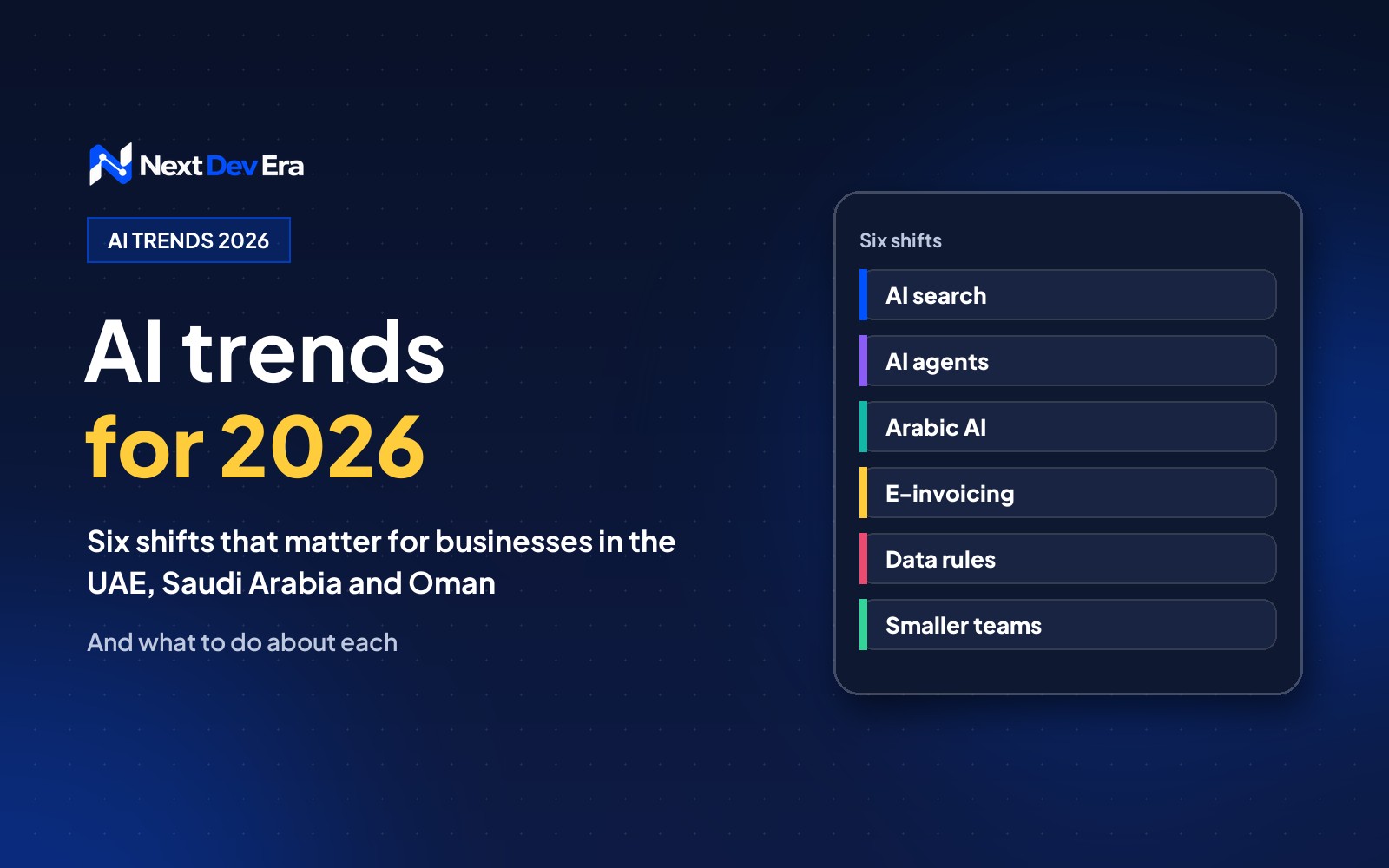
The AI trends 2026 has brought for Gulf businesses are customers asking AI assistants before Google, AI agents doing real back-office work, usable Arabic AI, e-invoicing in Saudi Arabia and the UAE, stricter data protection, and small teams building faster. Start with AI search, then automate one task.
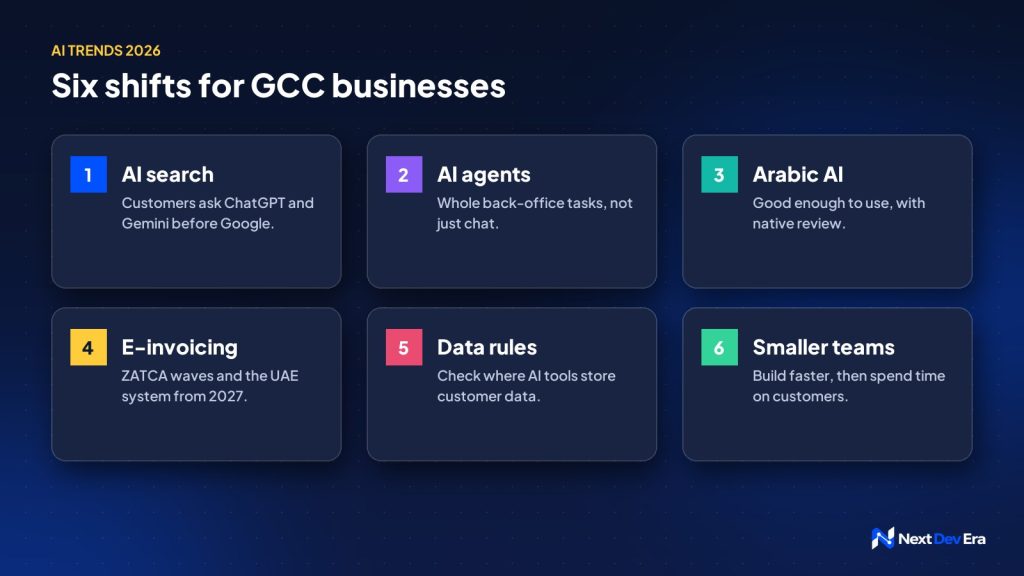
The AI trends 2026 has brought for businesses in the UAE, Saudi Arabia and Oman are less about new technology and more about AI showing up in places you already work: search results, WhatsApp, your accounting software and your team’s daily tools. Here are the six shifts we think matter most for a growing business in the Gulf, and what to do about each.
1. Customers ask AI before they search
More people now ask ChatGPT, Gemini or Perplexity for a recommendation before they open Google. Google itself shows AI Overviews above normal results for many searches, and they work in Arabic.
What to do: make sure your website answers questions plainly, your business details match everywhere, and you’re mentioned on sites AI assistants trust. Our guide to what AI SEO is explains how.
2. AI agents move from demos to daily work
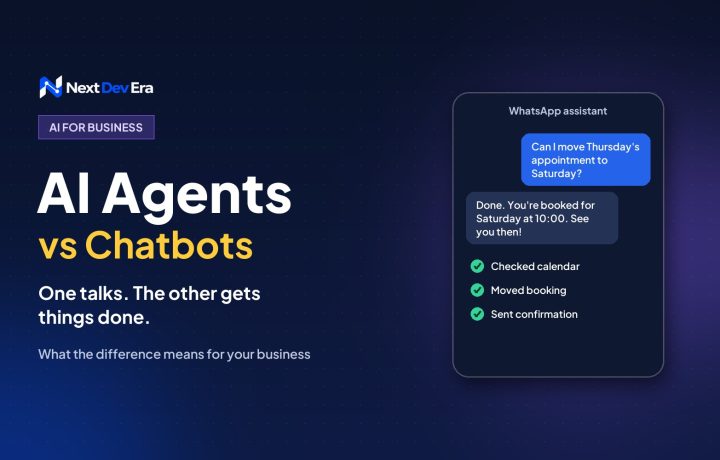
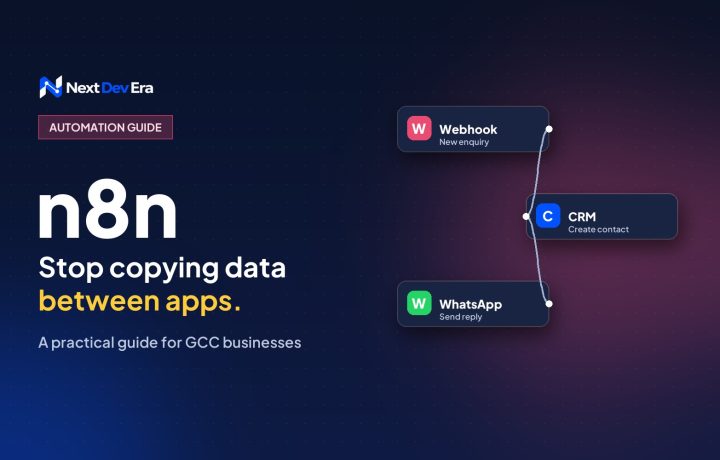
Last year most businesses tried AI by typing into a chat window. Now AI agents are doing whole tasks: chasing invoices, sorting enquiries, preparing reports. The tools to build them, like n8n, have become practical for small teams.
What to do: pick one repetitive back-office task and try an agent on it, with a person approving the results. Our post on agentic AI for business covers how to choose.
3. Arabic AI gets good enough to use
AI models now handle Arabic far better than they did two years ago, including Gulf dialect. That opens up chat, content and support in the language many of your customers prefer.
What to do: test any AI tool with the way your customers actually write, including Arabic typed in Latin letters, before you put it in front of them. And keep a native speaker reviewing anything published.
4. E-invoicing makes your data AI-ready, whether you planned it or not
Saudi Arabia’s ZATCA has been bringing businesses into Phase 2 e-invoicing in waves, with the 25th wave due from February 2027. The UAE has announced its own e-invoicing system: a pilot that began in July 2026, then businesses with revenue of AED 50 million or more from January 2027 and the rest from July 2027.
What to do: if you’re choosing accounting or business software this year, make sure it supports e-invoicing in your country. Structured invoice data is also exactly what an AI agent needs to reconcile payments. We wrote a guide to choosing business management software with this in mind.
5. Data protection rules start to bite
The UAE and Saudi Arabia both have personal data protection laws, and AI raises new questions about them. Where does your chatbot store conversations? Is customer data used to train someone else’s model?
What to do: before you connect any AI tool to customer data, check where it processes and stores that data, collect only what you need, and tell people when they’re talking to an AI.
6. Small teams can now build what used to need a big one
AI writing, design and coding tools have lowered the cost of building websites, apps and content. That’s good news, but it also means your competitors can move faster too.
What to do: use AI to speed up the first draft of things, and spend the time saved on what AI can’t do well: understanding your customers, checking facts, and making decisions.
Where to start
You don’t need to act on all six. For most businesses, the best order is: fix how you show up in AI search, then automate one back-office task, then look at customer-facing AI.
If you’d like help working out which of these matters most for your business, book a free 30-minute call.

Beautifully written, This is helpful.
This was a very insightful to read.You’ve presented the ideas with such clarity that it gives a really clear perspective on the topic. Great work.
This was a very insightful to read.You’ve presented the ideas with such clarity that it gives a really clear perspective on the topic. Great work.